Everything below applies to the children’s garments we sell. Adult companion pieces are covered separately in the section on adult companion pieces. If you want the documentation behind any of it, ask us for it — we will send what we hold.
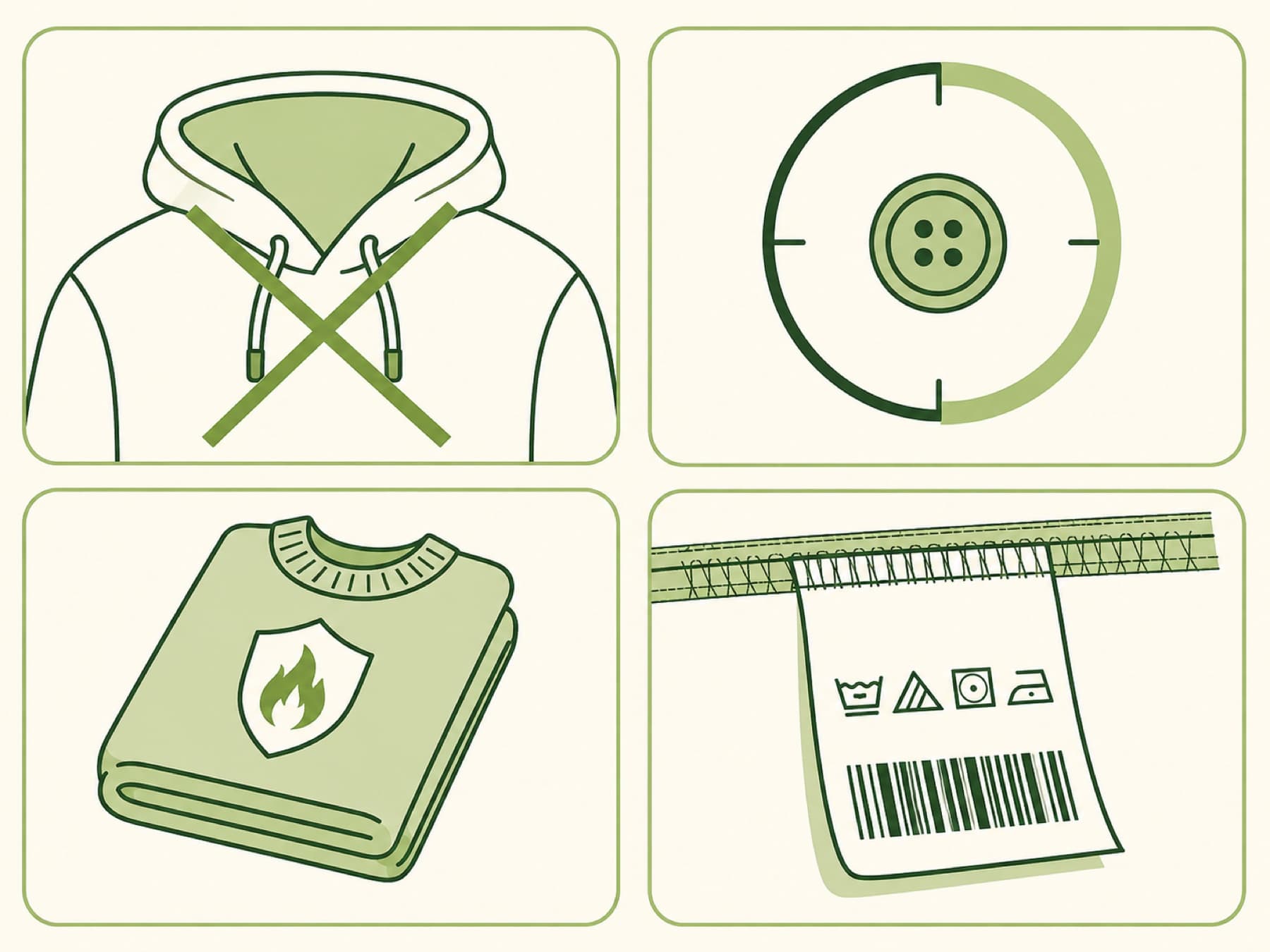
CPSIA limits and certificates
The Consumer Product Safety Improvement Act sets the ceilings that every children’s product has to sit under. Our suppliers manufacture to those limits and we hold test reports covering them:
- Lead in substrate materials: not more than 100 parts per million.
- Lead in surface coatings and paint: not more than 90 parts per million.
- Phthalates: the eight restricted phthalates are limited to 0.1 percent in plasticised components. On our garments that means prints, coatings and any flexible trim.
Testing is carried out by laboratories accepted by the Consumer Product Safety Commission for the relevant test method, and each production batch is covered by a Children’s Product Certificate issued against those reports. The certificate names the product, the rules it was tested against, the laboratory and the date and place of manufacture.
We do not publish the certificates as downloads, because a certificate only means something when it is matched to the batch you actually have. Quote the batch number from your garment’s tracking label and we will send you the certificate and reports that cover it.
Tracking labels
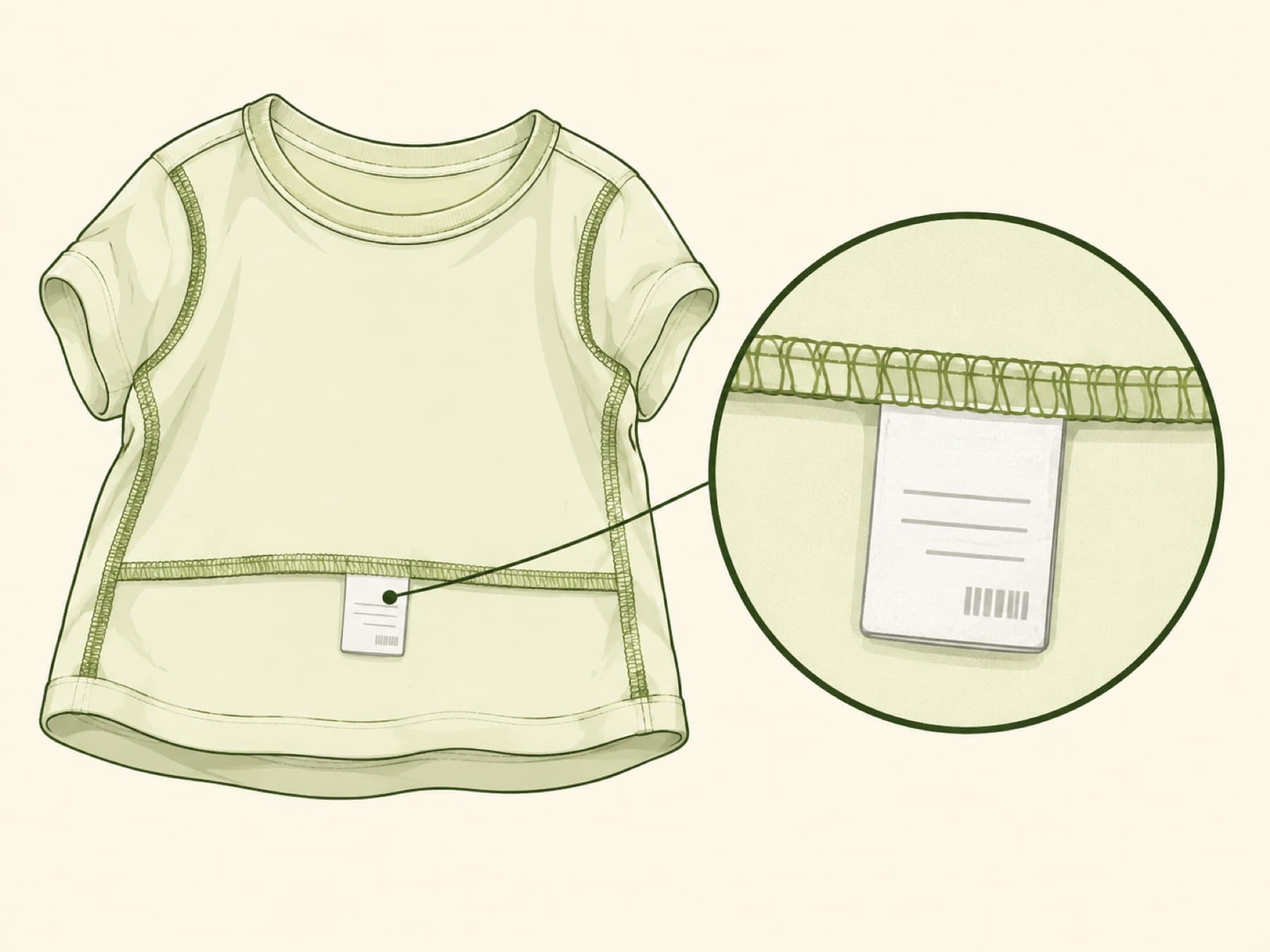
Federal law requires a permanent, distinguishing mark on children’s products and their packaging so that a specific production run can be identified after it leaves us. Every children’s garment we sell carries one.
The label gives:
- the manufacturer or private labeller
- the place of production, as a city and country
- the month and year of production
- the batch or run number
Each product page states exactly where that label is sewn — the inner left side seam, the inside back of the waistband, the leg seam below the knee, and so on — so you are not turning a garment inside out looking for it. The batch number is the last block on the label.
Flammability
Two separate rules apply, and which one applies depends on whether a garment is sleepwear.
General wearing apparel — 16 CFR 1610
Every textile garment sold for wear in the United States has to meet the general flammability standard. Fabrics are tested for rate of flame spread and classified; Class 1 is the normal flammability class and is what all of our fabrics are. This is a baseline requirement, not a performance feature, and it does not mean a garment will not burn.
Children’s sleepwear — 16 CFR 1615 and 1616
Sleepwear in sizes 9 months through 14 has to be either flame resistant or tight-fitting to specified maximum dimensions. These are alternatives, not additions.
Sleepwear, in detail
We take the tight-fitting route on every sleep piece we make. That is a deliberate choice with consequences in both directions, so here is the whole of it.
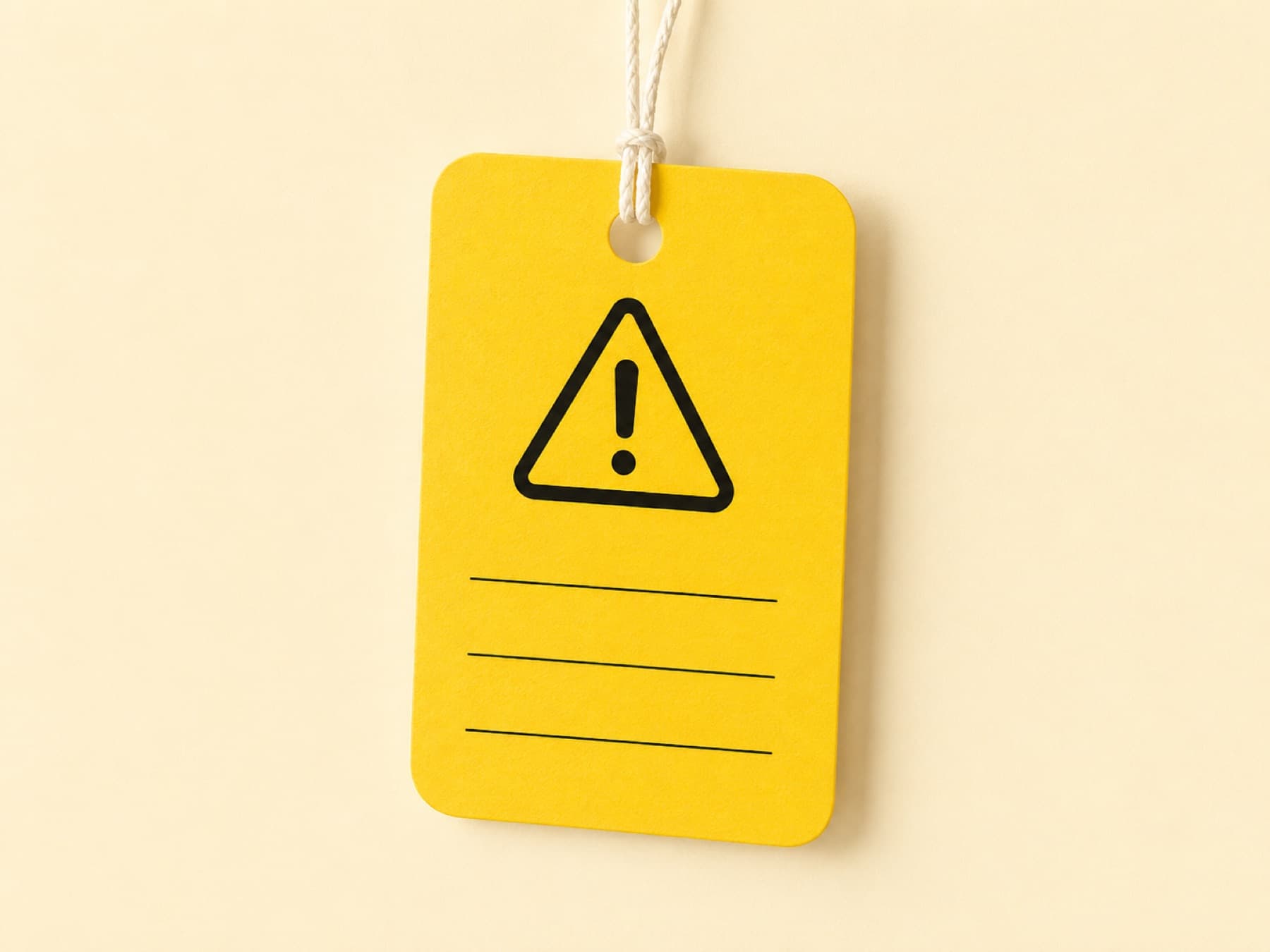
Wear snug-fitting. Not flame resistant.
This is the wording that appears on the yellow hang tag attached to every piece of sleepwear we sell, and it is the plain truth about the garment.
What tight-fitting means
Loose fabric is what catches and carries a flame. A garment cut close to the body has very little air between the fabric and the skin and very little loose material to catch, which is why the rule treats a snug fit as an alternative to chemical flame resistance. Sleepwear taking this route must be made to maximum chest, waist, thigh, wrist and ankle dimensions set out in the rule for each size, and must carry the yellow warning tag.
Why we chose it
The alternative is treating fabric so that it self-extinguishes. That works, and garments made that way are legitimate and legal. We would rather sell untreated cotton cut to fit closely, and be direct about what that does and does not do.
What it asks of you
- Buy the size that matches the height. A size up is a looser fit, and a looser fit takes the garment outside the basis on which it complies.
- Do not hand a set down while it still “fits” loosely. The same garment on a smaller child is no longer snug.
- Keep the yellow tag on until first wear so whoever is dressing the child sees it.
What we do not sell
We do not sell loose-fitting children’s sleepwear that is not flame resistant, in any size or style. That includes nightgowns, nightshirts, loose robes and oversized pyjama sets. It is one of the highest-recall categories in children’s clothing and we have chosen to stay out of it entirely.
Drawcords
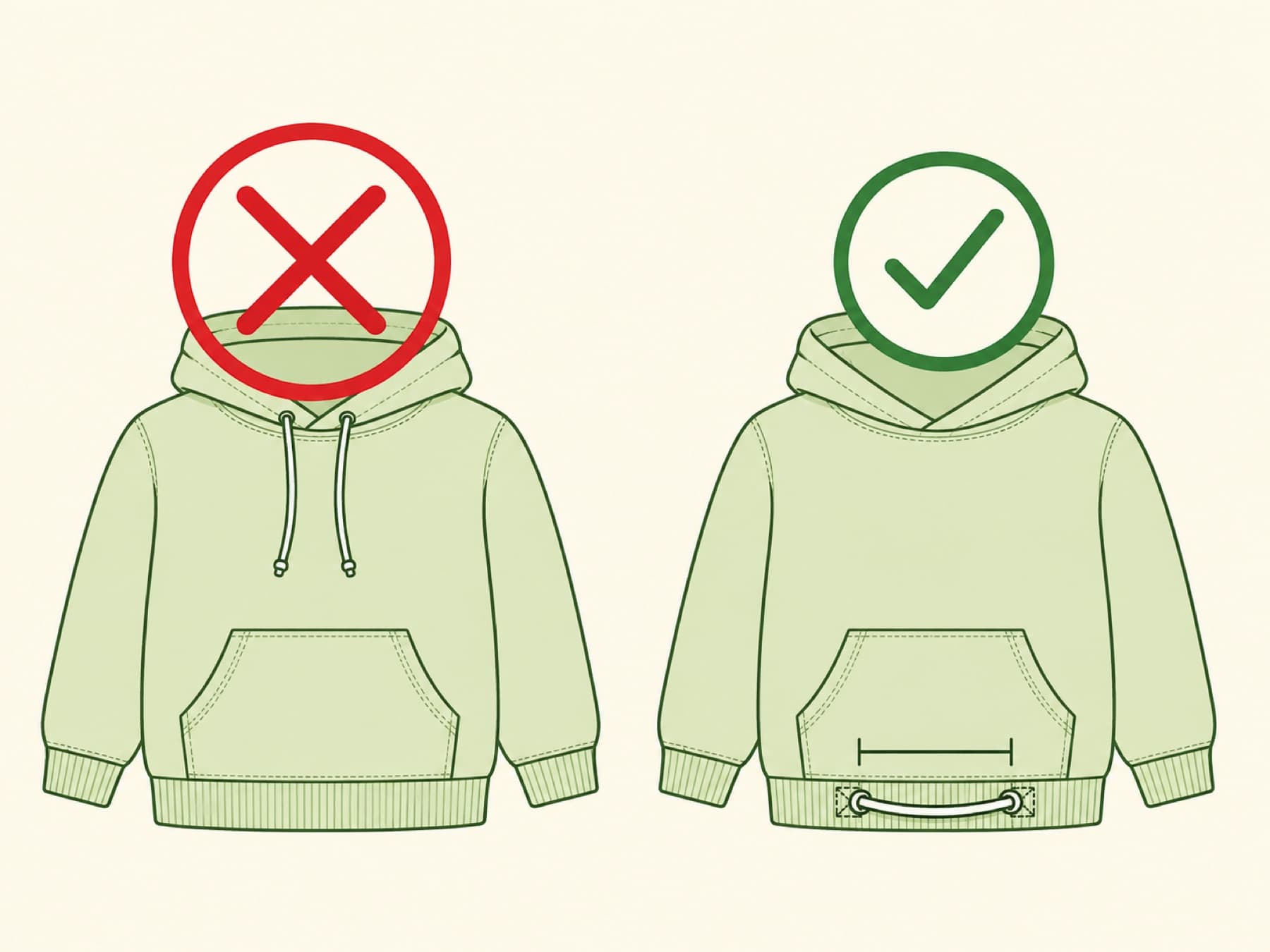
Cords at the neck and hood of children’s upper outerwear are a strangulation hazard: they catch on playground equipment, bus doors, cot rails and car doors. The industry standard ASTM F1816 and CPSC guidance address this directly.
- No neck or hood cords. Not in sizes 2T to 12, and not in any other size we make. Our hoods have no cord channel and no eyelets, so a cord cannot be added afterwards.
- Waist and bottom cords, where they exist, extend no more than 7.5 cm from the channel when the garment is at its fullest, have both ends secured with a bar-tack, and cannot be pulled out.
- No toggles, knots or free ends on any children’s garment.
This is enforced in our systems as well as in our patterns. The drawcord field in our product data has exactly two possible values, none and waist, secured. There is no value representing a neck cord, so a garment with one cannot be entered into the catalogue at all.
Small parts
Under 16 CFR 1501, articles intended for children under three must not contain small parts that can be swallowed or inhaled. A part is “small” if it fits entirely within a cylinder of the specified dimensions.
- Nothing sized for a child under three carries a detachable small part. No pom-poms, no appliqué, no beads, no decorative badges.
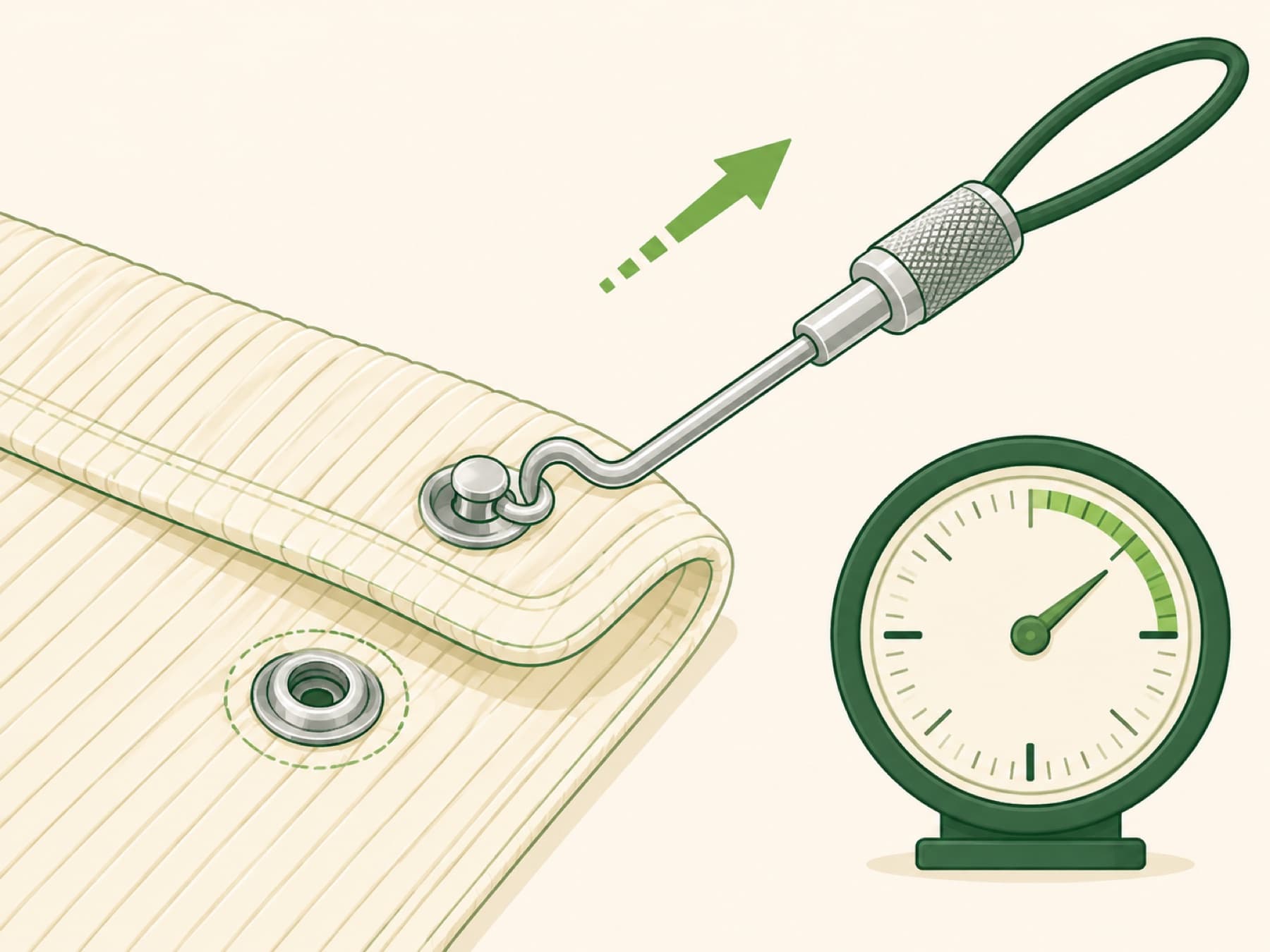
- Buttons, snaps, rivets and zip pulls are attached by machine, lock-stitched or riveted, and pull-tested to the force the standard specifies for the age grade.
- Every children’s product page states the small-parts position in words, plus a minimum recommended age.
Pull-testing is a check against attachment failure under ordinary use. It is not a promise that no component can ever come away from a garment. Check clothing for loose fastenings from time to time, particularly on hand-me-downs and after repairs.
Scarves and long ties
A long scarf on a moving child is a real hazard: it catches in bicycle wheels, on climbing frames, in escalators and in car doors. Our knit scarf is cut to 80–90 cm depending on size, rather than the 140 cm an adult scarf runs to.
Take scarves off before active play, cycling or climbing, every time. Length limits reduce the risk. They do not remove it, and no scarf we can make is safe to play in.
Adult companion pieces
The matching adult pieces we sell are cut to adult body size and are not children’s products. The children’s rules on drawcords, small parts, sleepwear flammability and tracking labels do not apply to them, and we do not imply otherwise: every adult piece carries a notice saying exactly that on its product page, in the basket and at checkout.
Adult pieces do carry the same fibre content, care and country-of-origin labelling as everything else we sell, and adult garments still meet 16 CFR 1610 general apparel flammability. Our adult pyjama set is adult sleepwear and is not made to the children’s tight-fitting dimensions.
What we do not claim
A great deal of children’s clothing marketing rests on claims that cannot be substantiated. We do not make any of the following, anywhere on this site:
- No antibacterial, antimicrobial or dust-mite claims. A pesticidal claim about a treated article is a matter for the Environmental Protection Agency, and we make none.
- No hypoallergenic, anti-allergy or sensitive-skin claims. Any fabric can irritate any skin. Our fibre content is printed in full so you can judge for yourself.
- No claim that anything is completely safe. We tell you which standards a garment is made to and what has been tested. That is a different statement, and it is the only one we can support.
- No durability promises measured in years. Children grow. We publish growing room in centimetres instead.
- No organic fibre claim. That claim requires certification such as GOTS. We do not hold it, so we do not use the word.
- No United States origin claim. Our garments are manufactured in Portugal, Vietnam and India, and each product page says which.
- No safety claim for reflective trim. Reflective strips help a child be seen in low light. They are not protective equipment and are no substitute for supervision near traffic.
These are enforced in the build: a fixed list of prohibited claim patterns is checked against every page of this site before it can be published, and a match stops the release.
Proposition 65
California’s Safe Drinking Water and Toxic Enforcement Act requires a warning before knowingly exposing anyone in California to a listed substance above the applicable threshold. We assess prints, coatings, dyes and metal trims on every garment against the listed substances.
Each product page states the outcome of that assessment for that garment. Where a warning is required, it appears on the product page and on the packaging. Where none is required, the page says so plainly rather than leaving a gap.
Requesting documents
For any garment you own or are considering, we can send:
- the Children’s Product Certificate for the batch
- the third-party laboratory test reports it is issued against
- the fibre composition and care testing records
- the small-parts and attachment-strength test records
Email support@frankadamapparel.shop with the product name and, if you already have the garment, the batch number from the tracking label. We respond within one business day.
Reporting a concern
If something we sold you appears unsafe — a fastening that has come away, a seam that has failed, a garment that does not match what this page describes — tell us first and we will act on it. Call +1 818 170 3082 or email support@frankadamapparel.shop. We will ask for the batch number, arrange return of the item at our cost, and refund you in full.
You also have the right to report a product safety concern directly to the Consumer Product Safety Commission, whether or not you contact us. Reports can be filed at saferproducts.gov or by calling the CPSC hotline on 800-638-2772. Any recall notices affecting our products are published at our recall notices page, whether or not you are on our mailing list.